Oxford Historical Society, a 501 (c) 3 charitable organization
Twitchell Rowland Homestead Museum
P.O. Box 582, 60 Towner Lane, Oxford, CT 06478
2026 Fiber Fest ~ April 18 and 19.
Come peek into Oxford’s agricultural past at the 8th annual Oxford Historical Society Fiber Fest on Saturday, April 18, from 10 am to 4 pm and Sunday, April 19, from 1 to 4 pm. This unique free program is a rain or shine event and takes place on the grounds of the Twitchell-Rowland Homestead at 60 Towner Lane off Route 67 across from St. Thomas Roman Catholic Church. Look for the OHS sheep signs around town!
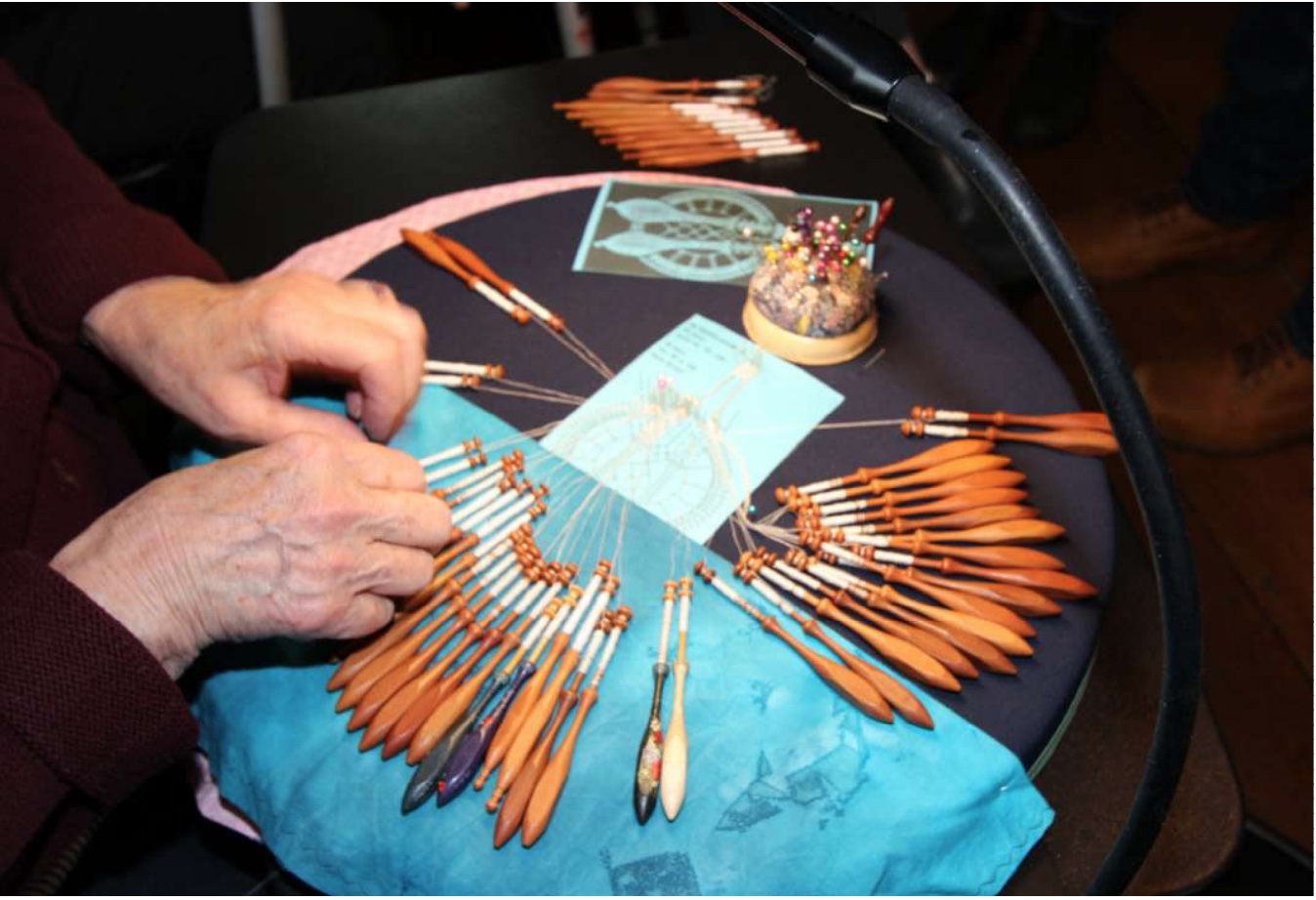
Local crafters will demonstrate using varied fibers for knitting, crocheting, weaving, crafting and more. On Sunday the New England Lace Makers Guild show how hand made lace is produced when cobweb-like threads wrapped around colorful bobbins are twisted and knotted into centuries old, astonishingly delicate designs in this timeless craft.
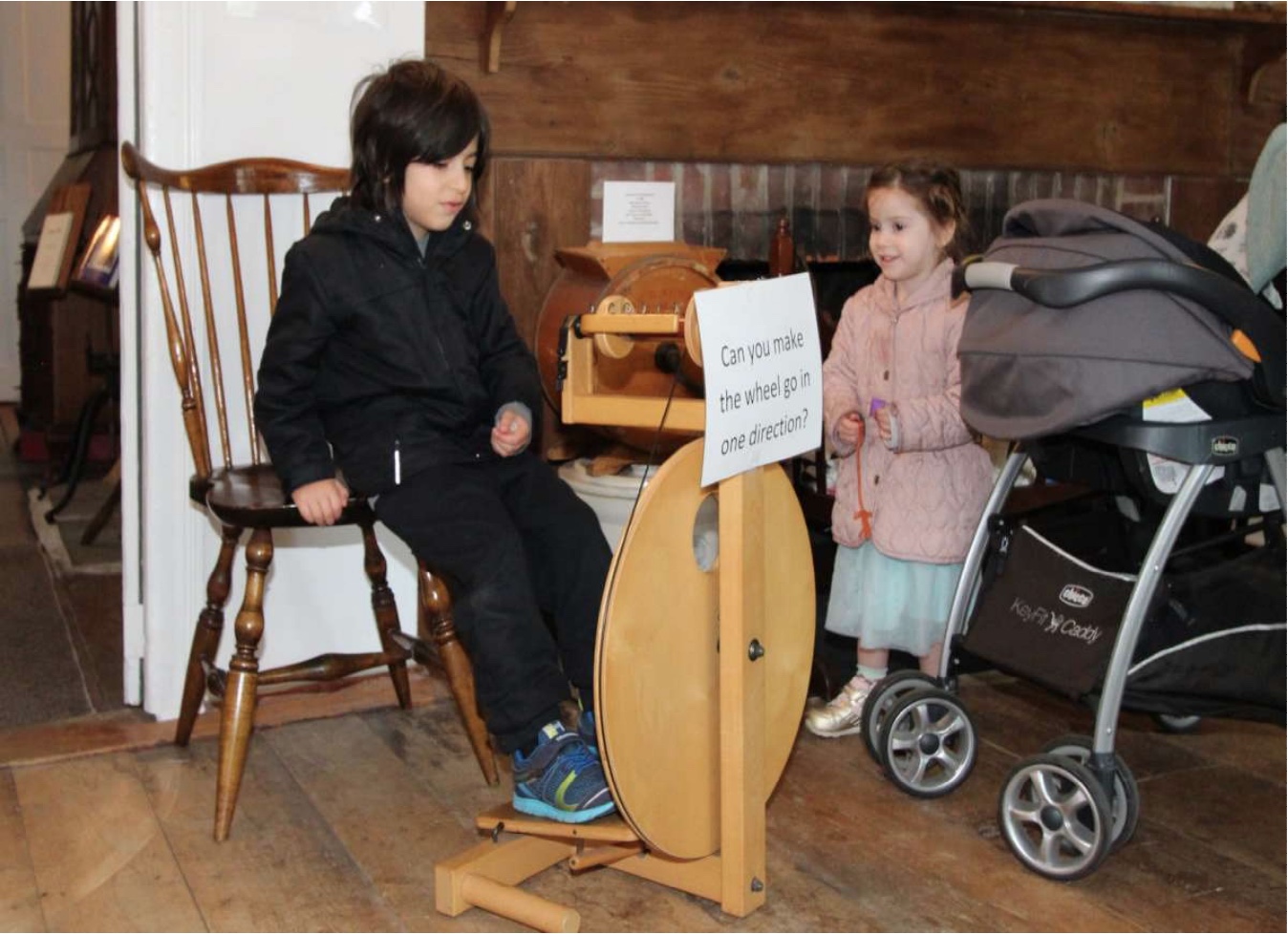
Hand crafted fiber artists will be on hand offering a range of products. Vendors: Rose East – knitting and felting; Leila Orienter – hand knits; Gail Cameron – embroidery; Robin Zeigler – brooms; Mardi Smith – baskets; Kitti Deak – herbs; June Bissonette – alpaca farm; Katherine O’Keefe – Pink Petticoats children’s clothing; Carol McElroy of Red Oak Weaving. New this year on Saturday watch rug hooker, Naomi Allen owner of Raven’s Gate Rug Hooking who will demonstrate the antique craft. Fiona Fine will return to spin fiber into yarn on an antique spinning wheel.
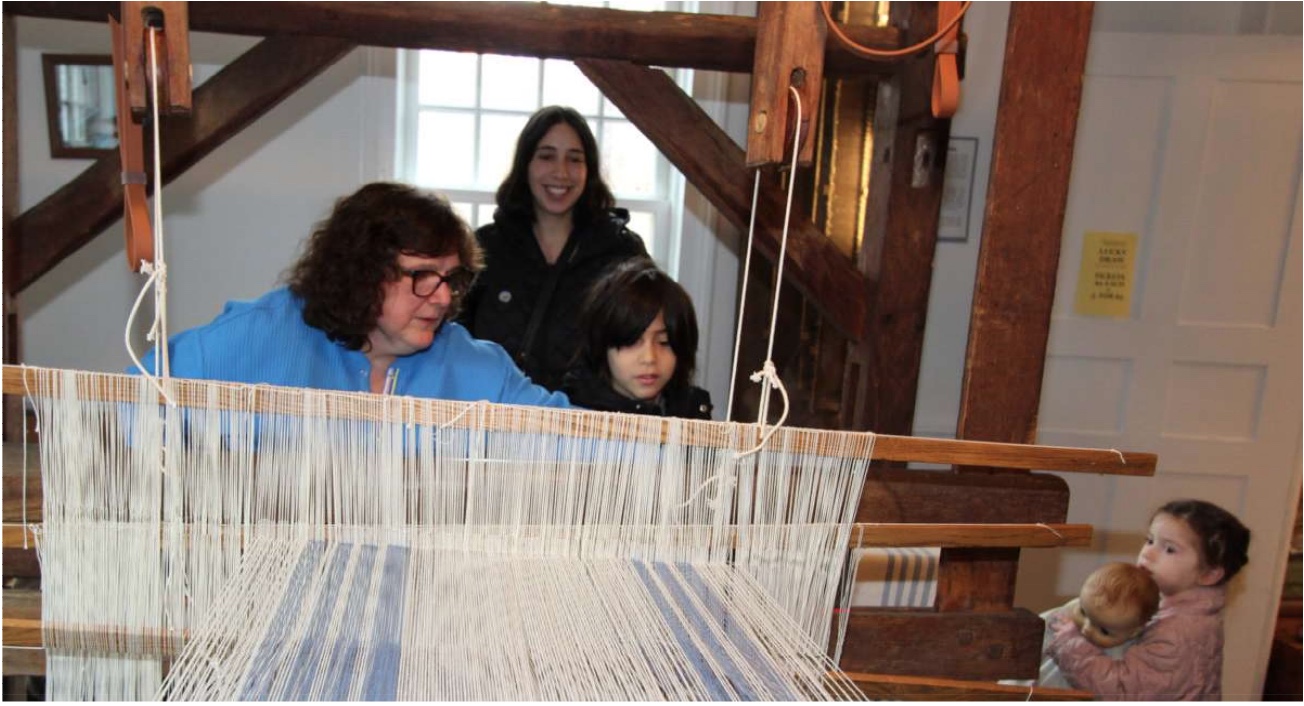
Demonstrations of weaving on the historic Jensen Barn Loom which fills one room of the museum will be given by Jan Galloway, Val Nelson, Linda Scinto and other volunteers.
Weather permitting visitors can watch shearing of alpacas, goats or sheep for the spring. The museum and the newly restored Munn schoolhouse will be open for free tours. Docents will be available to chat about the house built in 1755 by the Twitchells and the one room schoolhouse used in 1850 by Marcus Munn as a classroom for his boarding school on Oxford Road. Both buildings were relocated to the Historical Society campus to prevent their demolition.
Homemade treats will be offered. Books and notecards produced by the Oxford Historical Society members will be available for sale. These titles feature the old houses and buildings in Oxford, the history of local railroads, and veterans of various wars and con- flicts. The society’s notecards offer both photo-based scenes of the Stevenson Dam construction a century ago as well as historic views from the Society’s collections, and the newest designs, Claudia Farkas’s architectural prints of five of Oxford’s historic homes.
All sales and donations from this event benefit the Oxford Historical Society and are focused on supporting programs and preservation activities.
On Display: Fibers in Captivity
On Display: Fibers in Captivity– a wide range of fiber products will be available to visitors to the Twitchell Rowland Homestead in a hands-on “Petting Zoo” with ex- panded information on growing and using the various resources.
How do flax stems get made into linen thread?
- Does cotton really grow in a plant?
- What does it look like?
- Have you ever seen a silk worm?
Discover samples that are part of the collection of society member Linda Scinto. Students in fiber arts classes she taught explored these and more examples as she used them as teaching materials.
CCF’s Give Local 2026
The Connecticut Community Foundation’s Give Local online fundraising campaign is scheduled to launch on Tuesday, April 21, at 7 a.m. and closes on Wednesday, April 22 at 7 p.m. You can help the Oxford Historical Society earn bonuses and prizes as well as contribute to Society events and programs. Friends can click on the CCF website www.givelocalccf.org during the 36 hour giveathon and register a donation to benefit chosen nonprofits. In 2025, the OHS earned over 11600 in bonuses, donations and matching grants from about 20 donors. Connect online using a credit card or Paypal to make a donation and make a difference. Help us grow!
Historic Industry on Little River
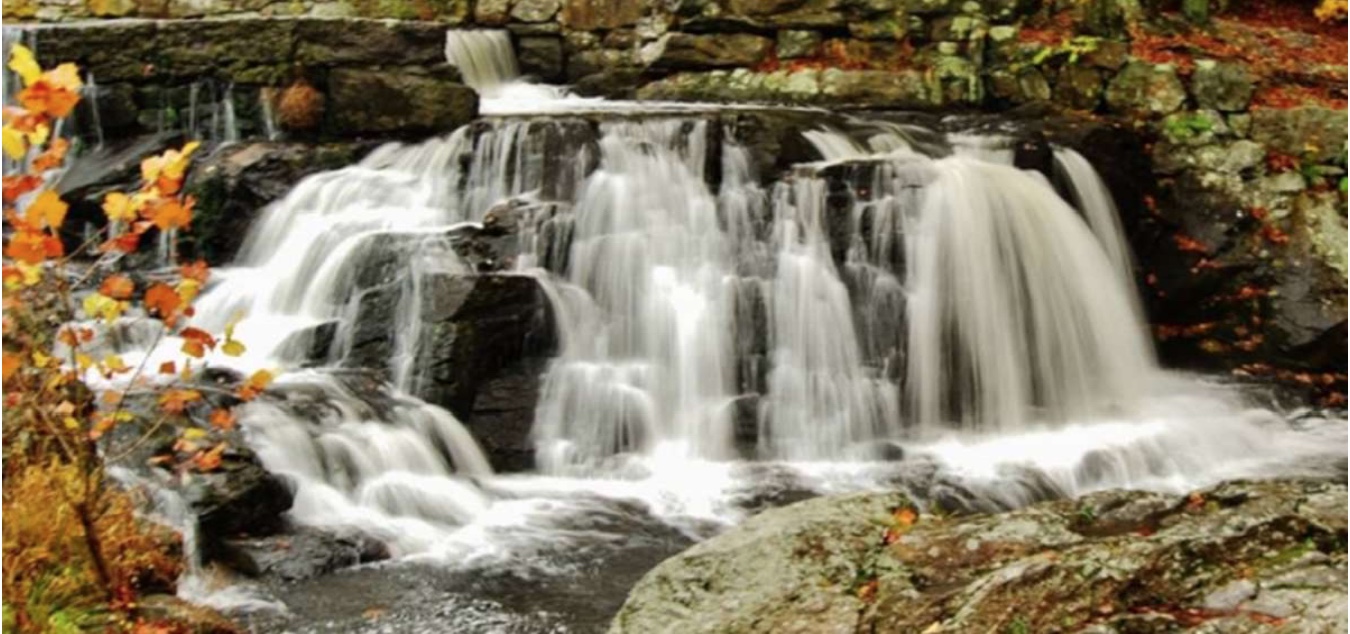
On Tuesday, April 28, 4-7 pm, Oxford Town Historian Dorothy DeBisschop looks at the early years of local industrial development on Little River from Hoadley’s Pond to Southford Falls.
This free program is co-sponsored by the Oxford Historical Society and is hosted by the Oxford Library at 49 Great Oak Road. Registration is requested: 203-888-6944 or online at the library website.
History on Little River
Much has changed since Oxford was incorporated as a town. Several reminders remain – the Oxford Hotel (now known as the Oxford House), the Washband Tav- ern (still at 90 Oxford Road), the old Oxford Turnpike (now known as Oxford Road) and the streams and brooks throughout the town. The Turnpike and Little River became a source of prosperity and innovation for the community.
Little River’s mills produced lumber, cider, apple brandy, and woolen cloth. Hat making became a major industry, followed by the production of daguerreotypes, an early photography method. The rise of the paper mill in Southford became a major employer in Oxford and Southbury. With so much commerce going on, invest- ment in the railroad followed.
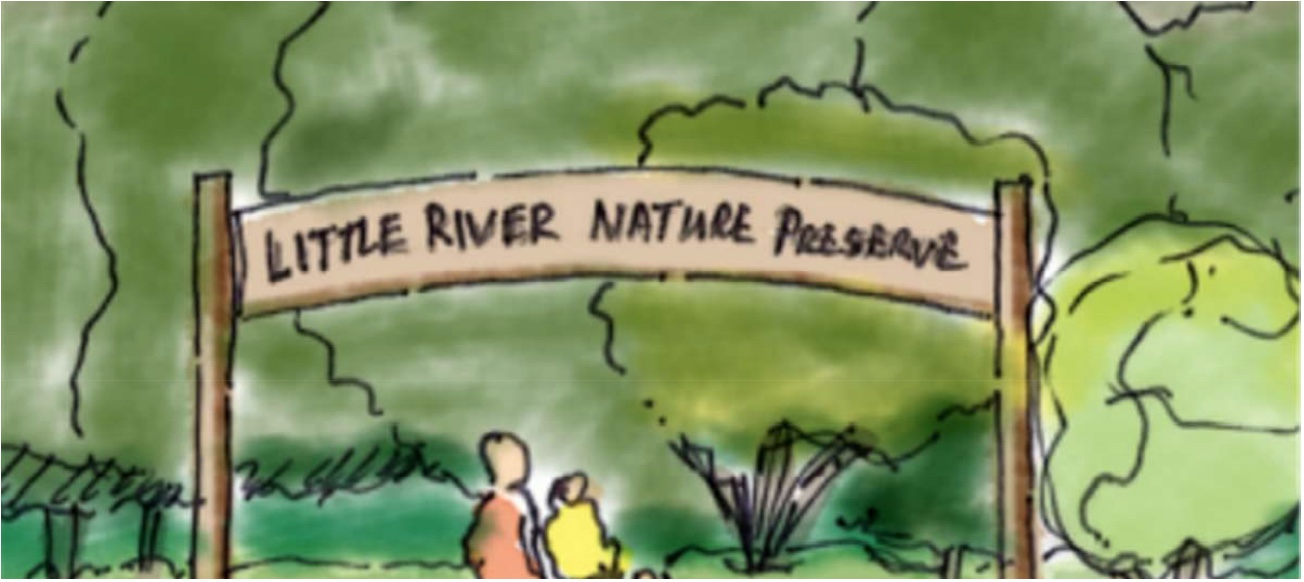
These industries have died out, but the Little River still holds secrets and memories of Oxford’s early pros- perity. Today, these memories are a. good reason for the development of the Little River Nature preserve. Our History of Little River will cover the development and the demise of the mills and factories that helped make Oxford prosperous.
Help Us Make More History

Help us make more history as the Oxford Historical Society’s America/250 Project documents the lives and records of Oxford’s veterans of the American Revolution for preservation. The group of a dozen local volunteers of all ages have researched period records in print and online. With the better weather this spring efforts will shift to locating veterans’ headstones in local cemeteries. People will be needed to revise records using the newly verfied and expanded info: photographers, readers and writers, video/sound recorders and tombstone cleaners and more.
America/250 may offer volunteers options for fulfilling community service, Eagle or Gold Scout, or Capstone project requirements. History buffs are especially welcome. Membership in the Oxford Historical Society is not required. Interested persons may call Dorothy DeBisschop at 203 910-4574.
Open House Schedule
- March 15, from 2-4 pm
- April 5 the Homestead will be closed for Easter
- April 19 is the Fiber Fest.
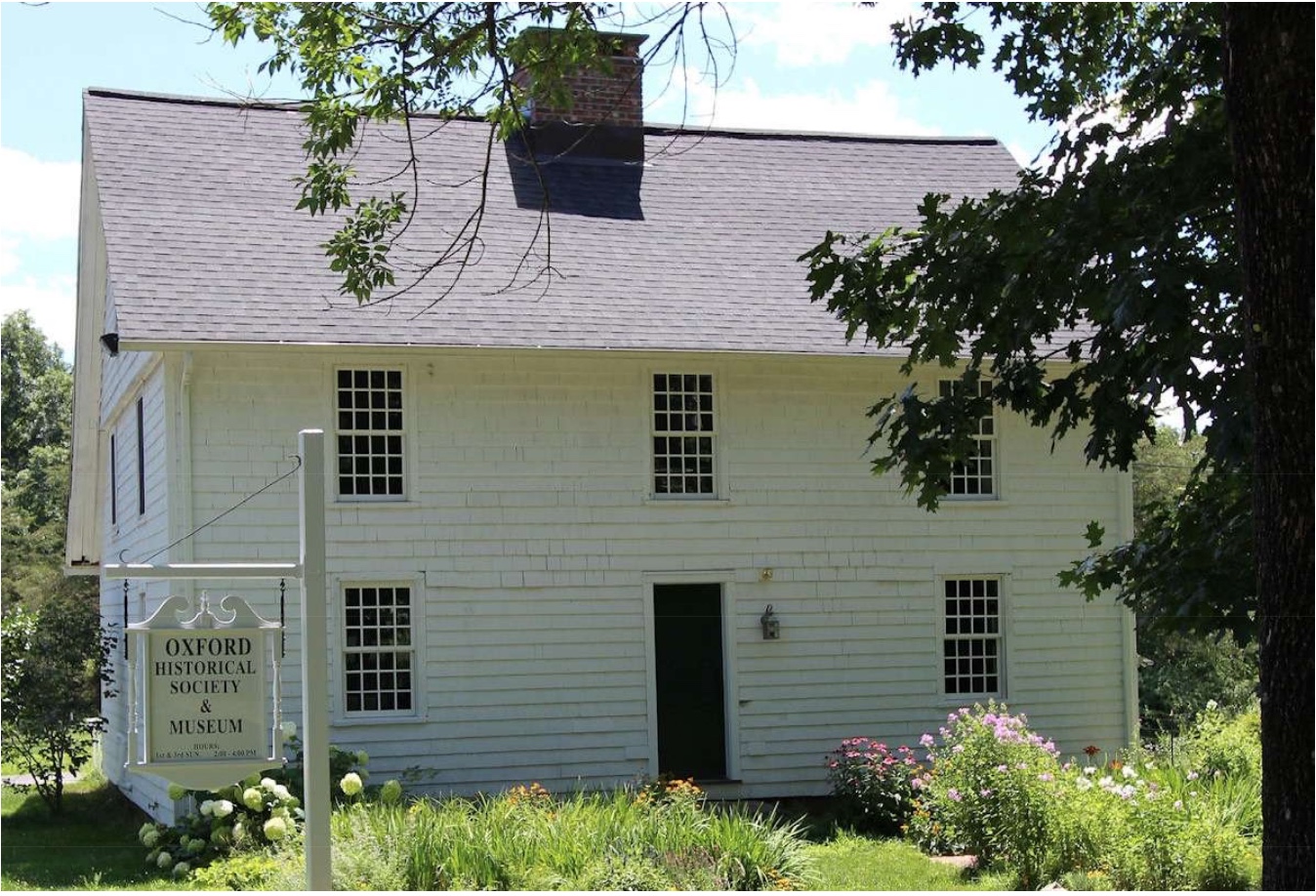
Each month on the first and third Sunday the Twitchell-Rowland Homestead is open to the public. Docents chat about the history of the house and the items found inside as well as other topics of interest to the community. Admission is free, all ages welcome.
Books produced by the Society are available for purchase as well as unique notecard sets created using local art and photographs. Proceeds benefit the society’s events and activities plus maintenance of the buildings and grounds.
Oxford Nature and Arts Festival
Oxford Nature and Arts Festival is coming on Sunday June 7, 10 am to 4 pm. Sponsored by the Oxford Land Trust this is a celebration of Oxford’s Main Street Project. Fine Arts and quality crafts will be on display and available for purchase. Musicians will offer a range of accompaniment, and food trucks will provide treats.
A morning walk will start the day and a reptile demonstration will be on offer. Local non-profit groups will share information on their activities and role in the local community.
Parking is available across Route 67 at the Town Hall complex. This is a free event, no admission is charged.
THE GREAT GIVE: MAY 6-7, 2026
The Valley Community Foundation’s Great Give is celebrating its 17th year of supporting local nonprofits serving Greater New Haven. Returning on May 6-7, this online 36-hour event is a way to help area organizations including the Oxford Historical Society when it opens at 8 a.m. on May 6. Your gift can also generate bonuses!
For further information or to give on May 6 or 7, go to http://www.thegreatgive.org.
Membership Dues for 2026
OHS membership is due for renewal for 2026 and the rates have not changed! Forms can be downloaded at the OHS website. Mail forms and checks to OHS, PO Box 582, Oxford, CT 06478. Individual memberships are 115, Seniors and Junior Associates (under 18) 110, Families 125 and Business Supporters (1200).
Member dollars help with society expenses and activities, and the numbers of members are used by grant givers as an indication of involvement with the community. Also listed are opportunities for volunteering.
Be sure to check those that appeal to you. Being a member really counts for us!
HERITAGE RECIPE: THE PLOCH FAMILY
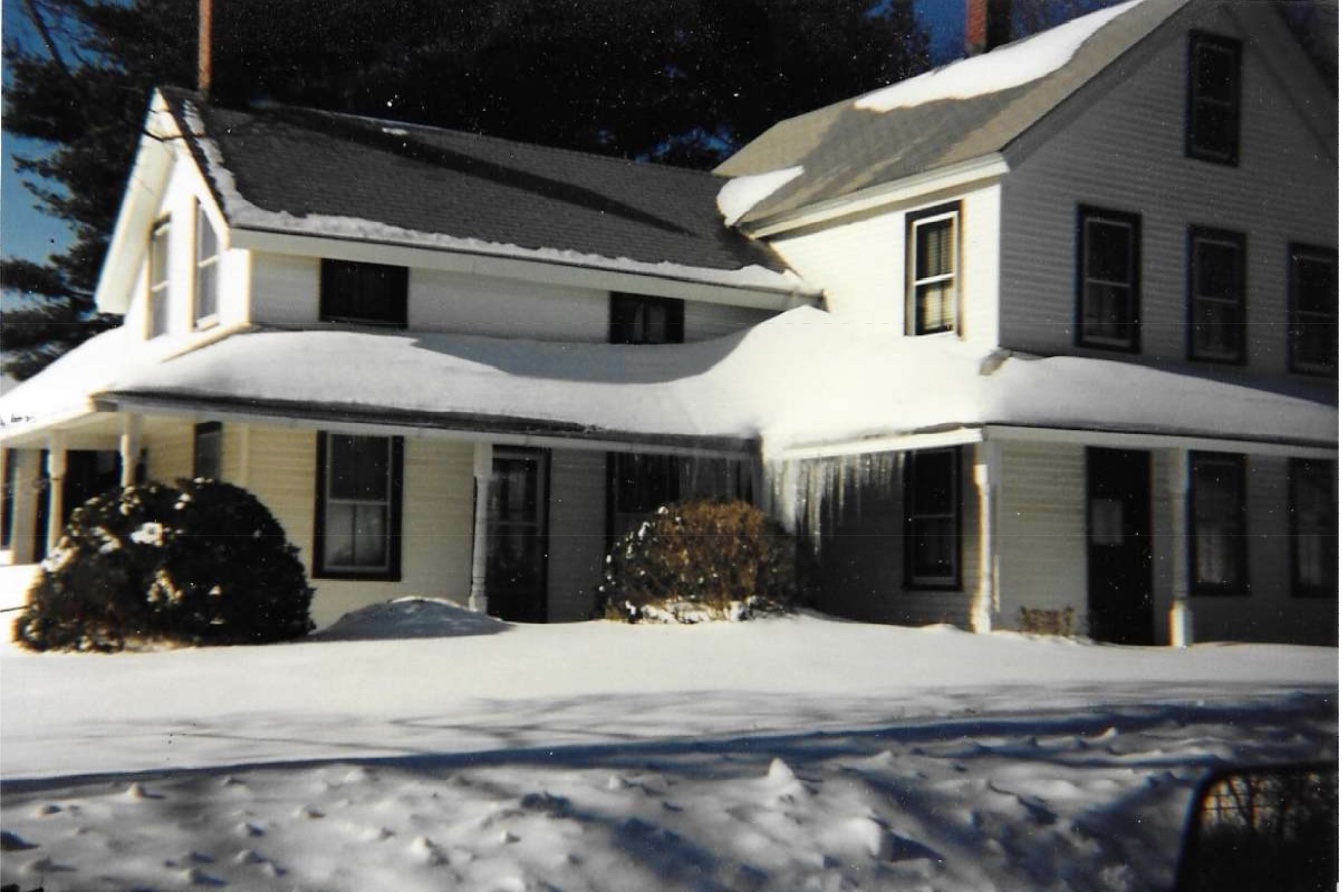
Diane Ploch’s roots are deep in Oxford’s Christian Street area. Her grandfather, Michol, and her grand- mother Agnes, originally from Poland, bought their farm of a little more than 100 acres there circa 1933, moving from Roxbury, CT with their four children. Diane’s fa- ther, John, served in the Army during World War II and, returning home, married Diane’s mother, Hedwig (bet- ter known as “Pat”) Rek from Naugatuck, also of Polish descent. The couple built their house up the street but still on farm property and Diane and her older brother Peter grew up there.
Diane’s father, John, worked various jobs before be- coming a carpenter. His youngest brother, Joe, worked on the farm, and in his youth was often charged with taking care of the youngest child, Sophie. Another brother, Lou, worked as a toolmaker for Risdon, a manu- facturing company, after serving in the Navy.
When Diane was old enough to go to school, kinder- garten was optional and the district provided no trans- portation. Her mother worked at Uniroyal’s Footwear Division so Diane “got her kindergarten education” from her grandparents, spending her days on the farm, build- ing a special relationship with her grandmother helping with the daily and weekly routines. Mondays they did laundry, and Diane was fascinated by the wringer washer. Wednesdays they headed to Waterbury to do the shopping. They cleaned and changed bedding, but they also cooked and baked. Agnes made wonderful fried potatoes, but her prize recipe was giant cinnamon buns, with the flour from a barrel stored in an outbuild- ing that was brought in as needed. She also made pierogi dough, filling it with farmer’s cheese or prune filling and showing Diane how to twist and pinch the dough.
The women of the family also picked pears and peeled peaches from fruit trees in the yard to can for the winter along with vegetables from the garden. The jars were stored in the cold cellar.
Holidays were spent with the grandparents. Diane recalls dressing up for Easter, taking photos outside before going to church. Then they returned for a spe- cial breakfast of borscht for the adults, a soup made not with beets but with browned flour. Hard boiled eggs and kielbasa were added at the table. Diane never acquired a taste for it and ate the chocolate bunnies their uncle brought the kids instead. On special occasions they ate in the dining room instead of the kitchen, carefully set- ting the table with the “best” dishes and silverware. This was a job Diane loved, helping her aunt make every- thing perfect. After breakfast they went to Pat’s parents’ home and spent the rest of the day there. Pat (or Hedwig) was one of 12 children, so there were lots of cousins to play with.
Christmas Eve brought them back to the Ploch farm again. As they opened their gifts year after year, it was a tradition for their grandfather, Michol, to watch every- one else and enjoy their pleasure in their presents. He had to be urged to finally open his own. After he died, Diane’s father took up the custom and waited until last to pull off paper and ribbon.
The Ploch farm had cows and chickens. Diane kept her distance from both, waiting with the basket at the door of the chicken coop for her grandmother to gather eggs. Only when the cows headed out the barn door after milking did she pick up a switch to help urge them to the pasture. A bull visited occasionally, and she wanted nothing to do with him.
An enormous turning point came at a milestone birth- day for Diane and her brother, Peter. They were at the farm and their grandfather handed each of them a card with fifty dollars in it, a lot of money in those days. Their father, John, protested. “Pa, you can’t give them so much!” “Yes, I can,” his father said. “I had to sell part of the farm to the state for the airport and you’re going to have to move.” It was a huge shock and they were not the only farm affected. But Michol had saved a strip of land on Hurley Road for them and for Diane’s Aunt Sophie and her husband. Diane’s father built another house on that parcel with the help of friends and family. Diane lives there today. Cousin Mike lives in the original farmhouse and inherited “the farming gene,” having a love for tractors and running a trucking business prima- rily serving the agriculture industry. The airport control tower stands where Diane’s parents’ first house once was.
Diane harbors a special place in her heart for Oxford Center School and her eight years there. She says it still appears in her dreams from time to time. She feels the heart of the school was the gym/auditorium/cafete- ria. It gave her a sense of community and authority when they gathered there on the first day of school or for spe- cial programs. Second grade was in the campus build- ings, and Diane was assigned to her favorite teacher, Mrs. Callahan. She remembers children from older grades stopping to say goodbye at the end of the day to their former teacher, often with a kiss. One not-so-happy memory was when Diane held the exalted job of line leader and slipped on the ice near the bottom of the stairs on the way to the main building. Off she went to the school nurse, horribly embarrassed. As she got older and it was the 1960’s, the same school nurse measured the girls’ skirts. There were no miniskirts allowed at Oxford Center School!
Because Diane’s mother, Pat, worked, she needed quick casseroles to serve during the week. Sun- day would bring a nice meal, perhaps a roast, but the other days she served comfort food, many based on cream of mushroom soup including a favorite with the soup, sausage and macaroni. Tuna casserole also ap- peared on the table frequently. One prized dish was potato pancakes, served on meatless Fridays during Lent. Everyone loved them and it became a tradition for the extended family to gather around the table together to enjoy them. They ate the pancakes with applesauce, or sour cream and cottage cheese, with a side of tuna. Diane does not have her mother’s specific recipe for potato pancakes because they were made by “eyeing” the ingredients. She offers a recipe that she feels is close.
Heritage Recipes: POTATO PANCAKES

- 6 large potatoes
- 2 eggs, slightly beaten
- 1 to 2 tablespoons flour
- ½ teaspoon baking powder
- Salt and pepper to taste
- 1 medium onion grated into mixture or thinly sliced, added at frying (optional)
- 4 tablespoons bacon fat or oil (or spray oil for griddle)
- Peel, cut and grate the potatoes. (Tip: Pat used a meat grinder instead of a grater.)
- Place in a strainer and squeeze much of the moisture out.
- Put the potatoes in a bowl, add the flour, eggs, baking powder, salt and pepper, and fold until well mixed.
The batter should not be too runny; otherwise adjust the amount of potatoes and/or flour. Heat a large skillet or griddle with the appropriate oil. Spoon the potato mixture onto the pan or griddle and gently press and shape with a spatula into pancakes, allowing space between. (If adding sliced onion, press gently into the top of the uncooked portion of the pancake.) Cook about 5 min- utes over medium low heat until the bottom is crisp and brown; turn and cook the other side about 5 minutes more. Keep warm in a 300 F degree oven until all are ready, then serve immediately. The Oxford Historical Society wishes to thank Diane Ploch for sharing her memories for this article. As she said in the interview, “They shape us into the person we are today.”
IN MEMORIAM – MARGARET KUTNIEWSKI
We have received word that Historical Society mem- ber Margaret Kutniewski passed away in early Febru- ary in North Carolina. Margaret joined the Historical Society soon after she and her family moved to Oxford and she quickly became a guiding force for our group. She was our treasurer through the period when we were moving the Homestead to its current location. In 2007 Margaret became our secretary. She worked at every bake sale and event that funded the old house’s resto- ration and had a voice in the many decisions that led to its opening as the town’s museum in 2012.
Beyond her practical accomplishments, Margaret was a joy to work with. Her humor, her common sense and her energy made a very positive difference in every new project the organization undertook. We were truly sorry when she and her family made the decision to move to North Carolina in 2010, but Margaret never for- got the OHS and continued her membership.
We received letters and e-mails cheering us on as we moved the Munn Schoolhouse, and last year she sent a note saying how much our group meant to her. The feeling was mutual. Thank you, Margaret. We send our sincere sympathy to the family that was the center of Margaret’s universe: husband Joe, sons Joey and Justin, and her daughters-in-law and her grandchildren.