Oxford Historical Society, a 501 (c) 3 charitable organization
Twitchell Rowland Homestead Museum
P.O. Box 582, 60 Towner Lane, Oxford, CT 06478
Can We Raise a BARN?
The Twitchell-Rowland Homestead Museum at 60 Towner Lane, Oxford plans to grow again. In 2006, members of the Oxford Historical Society saved the 1755 saltbox from demolition and moved it to its present location. In 2019, it was joined by the 1850 Munn Schoolhouse, presently completing its restoration. Now, the society hopes that a new construction will join the two existing buildings.
In the 1950s and 1960s when the Oxford Airport bought up the Christian Street farms that surrounded its proposed site, farmers auctioned off their equipment, hoping to recoup a few dollars of their investment. Items that were not sold were left abandoned as the families moved away. Neighbor Fred Rowland hated to see cider presses, chains, a homemade forge and other useful items go to waste and brought them home, storing them in his barn.
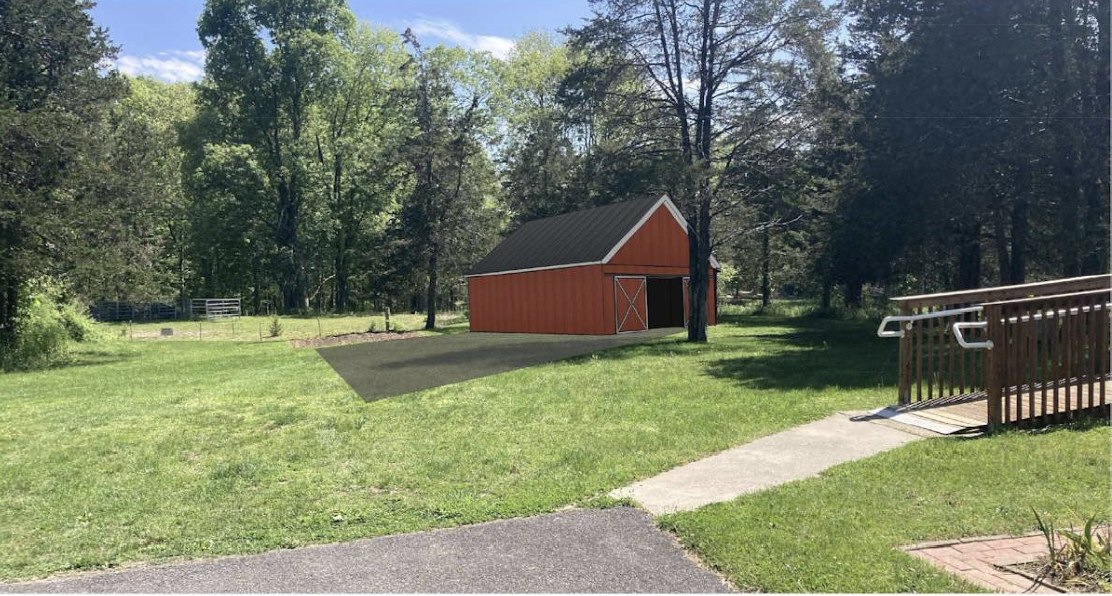
When the Twitchell-Rowland Homestead Museum was established, Fred’s plans grew. He envisioned adding a building to the museum campus dedicated to the farming machinery and tools he knew well and loved. Now his son, Charles Rowland, is working to make his father’s dream a reality. A volunteer barn building committee and the Oxford Historical Society Executive Board are proposing a 30 by 40 by 12-foot metal-sided struc- ture to be constructed behind the current museum. Known as the Oxford History Center, it will be located to allow for further expansion, with hopes of adding a climate-controlled office to house the society’s collection of historic town records and other fragile books and papers. The first phase of the barn will hold not only items Fred Rowland collected, but also the museum’s antique tools not on display due to lack of space. It will also provide a home for vintage farm equipment donated by local families wishing to share their treasured agricultural heritage.
The cost of the project is estimated to be 1100,000 and the Historical Society has established a fund of 120,000, thanks to a generous bequest given specifically for that purpose. Now the committee and the society are exploring ways to raise additional money. Donations and practical help would be very welcome.
The Society seeks online donations for the project as part of Giving Tuesday on December 2nd. Online donations may be made at https://www.oxford-historical- society.org (link at the bottom of page on left-side for either venmo or PayPal.) Donations by check may be mailed to Oxford Historical Society, P.O. Box 582, Oxford, CT 06478. All donations are tax-deductible. For further information contact 203 577-3184. Plans for the barn and a model can be seen at the Twitchell- Rowland Homestead. Call 203 888-0230 for an appoint- ment.
Annual Meeting Program Nov. 7th
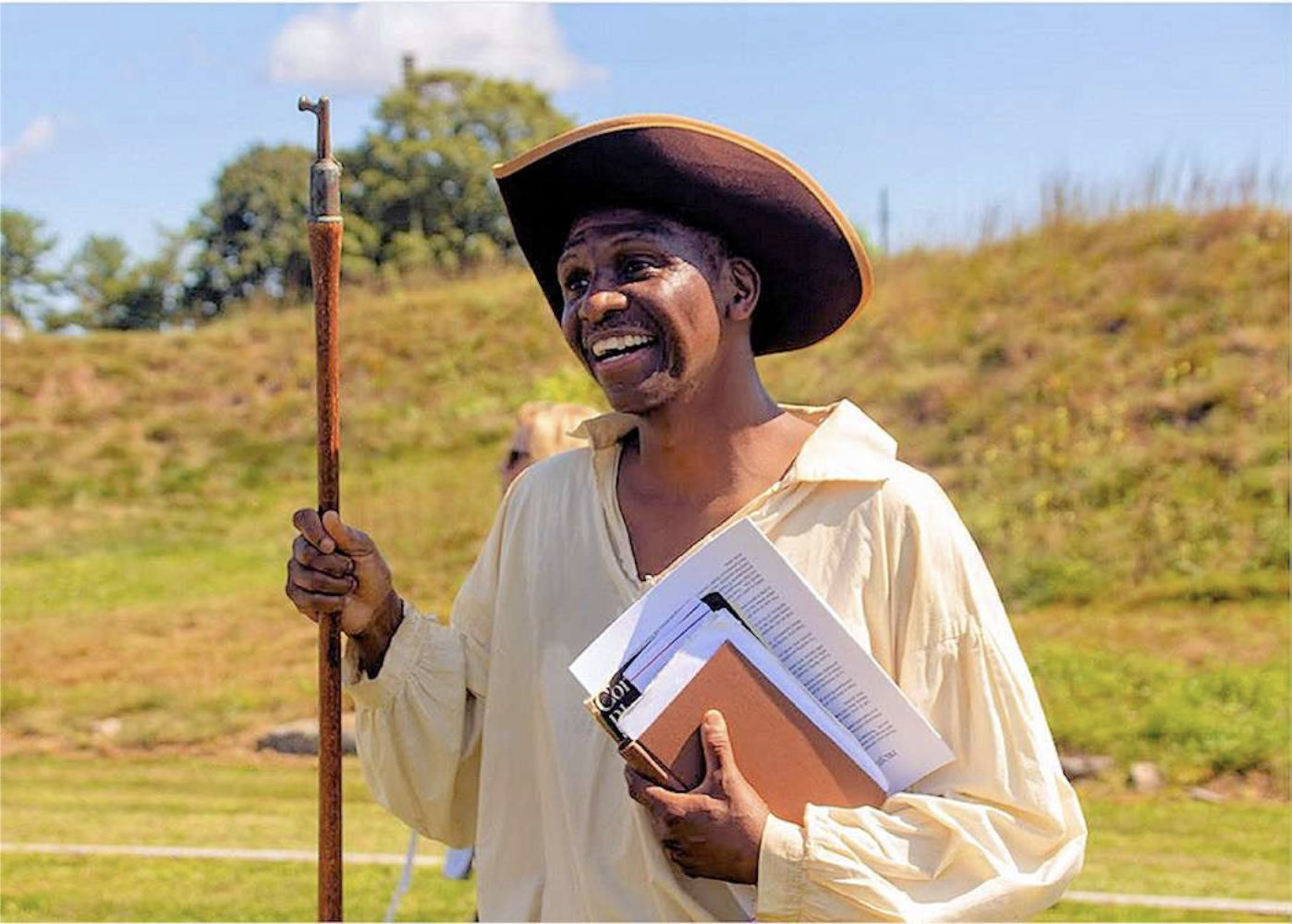
Meet Jordan Freeman Saturday, November 7 at 2 pm when Kevin Johnson returns with his interpretation of Jordan Freeman, an Af- rican American servant of John Ledyard and the body servant of Col. William Ledyard in the Revolutionary War. Freeman was a native of Old Lyme. Although he did not enlist himself, he witnessed key events of the War for Independence while with Col. Ledyard.
Historians estimate there were about 5,000 black soldiers in this war,serving in militias, seagoing services and support activities, including about 500 from Connecticut. Some enlisted because they felt it was their duty; others because they were offered their freedom in return for satisfactory completion of a set period of service.
The presentation is based on extensive research in the collections of the Connecticut State Library and the Museum of Connecticut History in Hartford. Kevin Johnson is an employee of the State Library’s History and Genealogy Unit. He has been portraying Jordan Freeman for about 17 years. Previously he reenacted the life of Pvt. William Webb, a black soldier in the Civil War, and Professor Jim Williams, a beloved Trinity College figure.
The program is hosted by the Oxford Historical Society at Great Hill United Methodist Church, 225 Great Hill Road in Seymour at the rotary with Rte 188. Admission to the program is a 15 donation. Students of all ages will be admitted free of charge. A question- and-answer period will follow Johnson’s performance and refreshments will be served. Those seeking more information may call 203-888-0230.
Did you know? Oxford’s Slave who served.
Tobias Pero, was freed by Town Meeting from his Tory owner John Wooster, earning his freedom by his patriotic military service.
THANK YOU, RON STEBAR
During Oxford’s 2026 America250 celebration, Town Historian Dorothy DeBisschop and her team of researchers identified 102 men with ties to Oxford who had either served in the Continental Army or worked for the American cause as civilians. So far, 32 of their graves have been found, but many of the stones do not indicate that they were Revolutionary War soldiers.
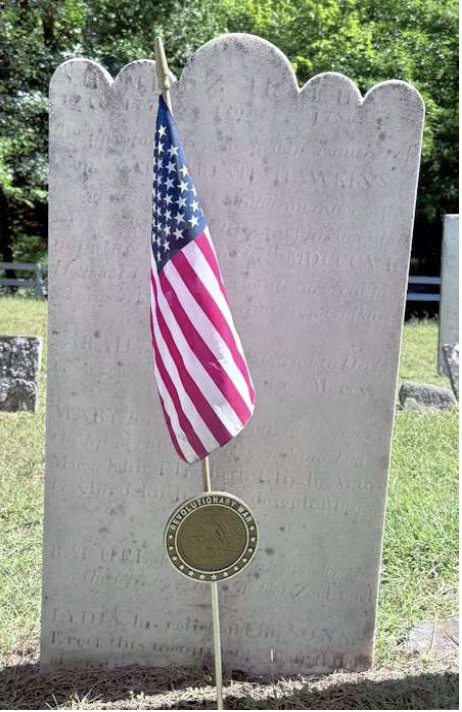
Wanting these men to receive the recognition they deserved, Ron Stebar, himself a veteran, worked with First Selectman George Temple to purchase special grave markers from the Gettysburg Flag Works. Displaying a medal emblazoned with the words “Revolutionary War,” thirteen stars and a picture of a musket- holding soldier, these aluminum flag holders have been installed on patriot graves in each of Oxford’s 7 cemeteries.
This project will continue as there may be additional soldiers whose graves have yet to be identified. The Oxford Historical Society would like to thank Ron for making certain that that our town’s long-ago heroes will not be forgotten. We are truly grateful for your efforts.
On Display: Toys! Toys !Toys! Plus some sheep and a barn
Look for a range of playthings from various decades loaned by friends and society members in December. Seasonal holiday decorations brighten our mantles, doors and windows. Please drop in during our regular monthly open house on first and third Sundays from 2 to 4 pm.
Open House: December 6 and 20, 2 to 4 pm the Twitchell-Rowland Homestead is open to the public. Docents chat about the history of the house and the items found inside as well as other topics of interest to the community. Admission is free, all ages welcome. Books produced by the Society are available for purchase as well as unique notecard sets created using local art and photographs. Proceeds benefit the society’s events and activities plus maintenance of the buildings and grounds.
Special Event Sunday: Twelfth Night – January 3, 2027, 2-4 pm. Start 2027 with a stop for some holiday refreshments, tour the Homestead decked out for the holidays and enjoy the decorations and displays. Meet some friends and make it a social break before the new year begins.
COUNTING TWO OF OUR BLESSINGS
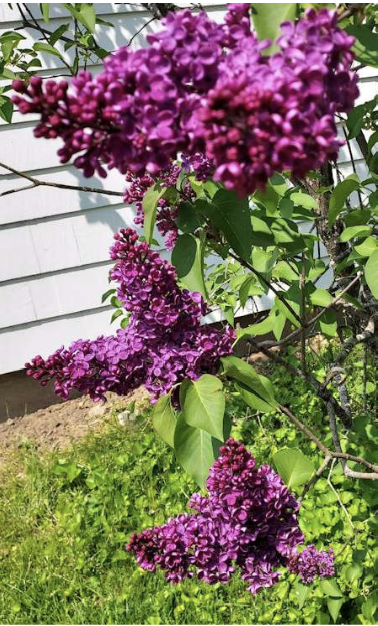
As the holiday season heads our way and we think back on 2026’s blessings, Elaine MacKinney and Kate McKinney instantly come to mind. During the spring, summer and fall, these two volunteers transformed the Homestead’s overgrown, out-of-control front garden into lovely perennial beds. Burdocks and bittersweet were banished, and Siberian irises were brought under control. Foxgloves that struggled here and there by the front door have been moved along the front of the house. The small bed beside the well became an herb garden where thyme, sage and other herbs thrived.
Best of all, Elaine and Kate, already thinking ahead to Spring 2027, have added daffodils and other spring bulbs to existing plantings. They will add perennials once the soil is ready.
We thank Elaine and Kate for their hard work and horticultural expertise. Because of them, we’re proudly showing our gardens to Homestead visitors!
More volunteer labor is welcome as there is much to do to maintain our historic house and grounds. Please contact us if you are interested in helping. For more information call 203-888-0230.
Heritage Recipe: CHARLES ROWLAND
Charlie Rowland remembers sitting as a toddler with his grandfather, Edward Rowland, in the living room of what is now the Twitchell-Rowland Homestead Museum, while Edward read to him from his farm newspapers. Their conversations about producing milk or growing wheat stayed with the little boy forever. He was a farmer from the get-go.
Charlie was the middle son of Fred and Myrtle Rowland’s three boys, with older brother, Dr. Fred Jr., and younger brother Gordon. Their roots in Oxford go back to 1900 when their great-grandparents, Phillip and Elizabeth Rowland, purchased their large farm on Chris- tian Street, moving from an earlier farm near the rotary on the Seymour-Oxford line. Son Edward continued in his parents’ footsteps, bringing home his bride Alfaretta and making his living as a dairy farmer. Elizabeth and Phillip then built a new home nearby on Christian Street.
The whole family worked hard, and everyone had a job. One of Fred’s chores as a child must have been gathering the eggs from the chicken coop. He made sure that his kids experienced the process and Charlie, in turn, passed it on to his daughters, Elizabeth and Haley.
After Edward died, Charlie remembers that Alfaretta continued to host the family holiday dinners in the room that now serves as a meeting place for the Oxford Historical Society. She also invited him and Fred Jr. for lunch, and they were not allowed to escape to the barn until they had cleaned their plates!
Alfaretta tried to run the farm by herself, helped by son-in-law Johnny Fritz and sons Fred and Edward, but eventually she moved to Southbury. The farm was rented and finally sold in the 1960s.
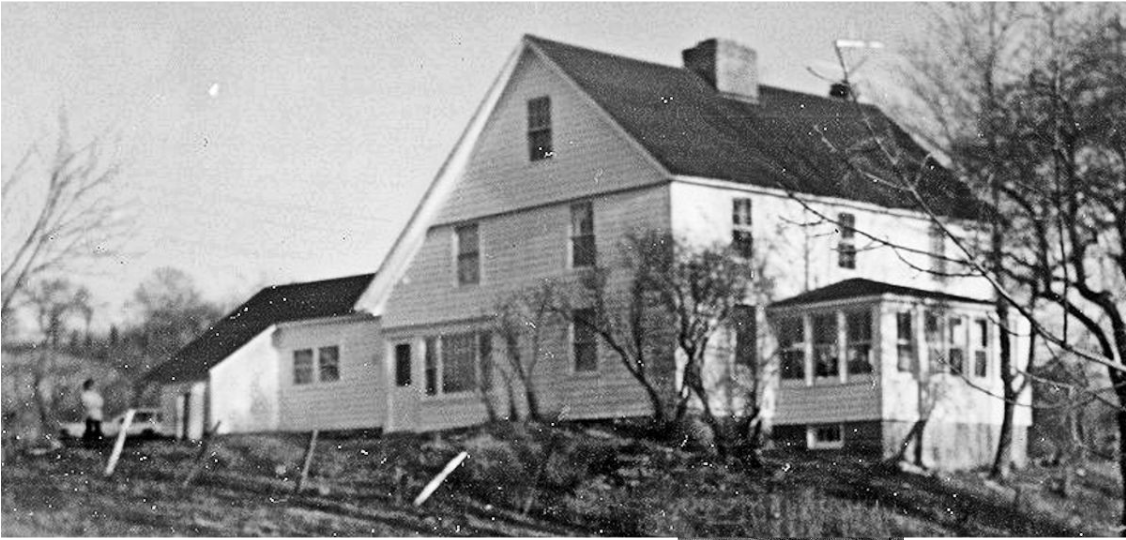
When Charlie’s dad Fred left the farm, he swore “No more animals!” and meant it. He earned a degree in auto mechanics from the International Correspondence School and found employment at various times at Naugatuck Ford, 2 service stations, Seymour Grain and Coal and Kerite, holding down two jobs at once.
In the meantime, his sons, Fred Jr. and Charlie, grew old enough to join 4H with Mr. and Mrs. William A. Bauer, Jr. as their leaders. Later, Bob and Dorothy DeBisschop returned from UConn and took over the group. The boys began with rabbits and then raised chickens, peddling eggs all over the Christian Street side of town. Next came beef cattle and finally, for Charlie, pigs. He continues to raise pigs to the present. Gordon followed his big broth- ers, just following the same path later since he was 4 ½ years younger than Charlie.
With Fred working 2 jobs, Myrtle was a stay-at-home mother who only learned to drive after she had a family to chauffeur between Little League Baseball, 4H meet- ings and fairs. She hauled a trailer full of lawn equip- ment for their mowing jobs at the Episcopal Church Cem- etery, the Center School athletic field, the small parks along Route 67 and private lawns. Meals were family affairs and the cooking was plain with little seasoning except salt and pepper.
After Charlie served in the Peace Corps in Jamaica and came home talking about the local cuisine there, his mom tried to spice up what was on their plates, but with no success. Baking was her forte, and the Row- land boys went to school with lunches made on home- made bread, envious of the kids around them with their store-bought sandwich fixings.
When their dad was home, he would set up 2 griddles at the table and there would be waffles or pancakes for a treat. The family planted a huge garden, canning and freezing the tomatoes and beans they grew. An unwrit- ten law insisted that corn be picked as fresh as pos- sible, with the pot of water boiling on the stove while they pulled the ears. Fred, Sr. is quoted as saying, “Walk to the garden to pick corn, but you’d better run back.”
There were canned peaches and pears in the winter, and until they purchased a home freezer, they rented a locker on Route 67 to preserve part of their crops. Myrtle was also in charge of disciplining 3 active boys, and times were different then. Charlie says she broke every yard stick she ever owned over their bottoms, but the worst punishment was being handed the paring knife to go cut the twig in the yard that would serve as a switch for punishment. He remembers getting his mouth washed out with soap not because HE swore, but because Gordon did and Myrtle figured Charlie had taught Gordon the unacceptable word.
Charlie continued to work on farms by the time he was 12 or 13, sometimes for the Vaivodas or Ralph Schoonmaker, mostly at haying time. He was part of a team with his friends Gary Smith and Austin “Junior” Brooks. Later he helped his dad’s cousins Oscar and Jean Lovdal on their farm in Southbury during the summers and on weekends. College found him at Cornell where he lasted 2 years and “started his junior year several times,” but he always found himself in the barns milking cows on nights and weekends. A stint in the Peace Corps took him to Jamaica for a year which he calls “a great opportunity.” Charlie was an agricultural agent in a remote rural area where there was electricity for only two hours a day. The local small-scale pig and dairy farmers welcomed his help. After a year, the political climate grew dangerously unstable and he returned home.
Now came twenty years of barn building, mostly pole barns for horses, dairy farms and storage, plus a couple commercial buildings. When he was introduced to his future wife Karen by mutual friend Diane Ploch, Charlie was working as an assistant manager on a farm on Long Island. They married and eventually moved back to Oxford, renting Joe Bailey’s house at 11 Towner Lane. When they built their new home, of course the barn came first and the house followed! They have been married “for 45 years and counting,” says Charlie.
Finally, Charlie returned to school and finished at UConn with a degree in agricultural education. He taught for two years in Bloomfield and then joined the staff at Wamogo, eventually becoming assistant principal and, briefly, principal before he retired. He still volunteers at a tractor restoration class on Friday nights with high school students and sits on various committees and support groups.
Charlie now dreams of one last barn built in his dad’s honor at the Twitchell-Rowland Homestead Museum to house the growing collection of antique tools and pieces of unused agricultural equipment that owners would like to see preserved for future generations. With the help of grants from the State of Connecticut, he is also work- ing to restore his fields that had grown up to brush to be used for pasture, making them ready for his daughters, Elizabeth and Haley, the fifth generation of the Row- land family to cherish the family farm.
OXFORD HERITAGE RECIPES: The following recipes were carefully typed on 3 by 5-inch cards by Myrtle Rowland and chosen by her son Charlie and grand-daughter Elizabeth for this column.
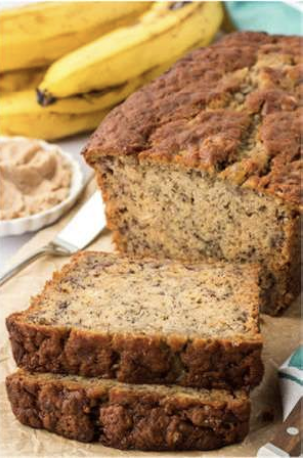
Banana Bread
- 3 ripe bananas
- ¾ cups sugar
- 2 eggs
- 2 cups flour
- ½ tsp. Salt
- 1 tsp. soda
- ½ cup nuts, chopped
Crush bananas with silver fork. Add eggs (beaten lightly), sugar and flour, salt and soda. Then nuts. Bake in a 5″ x 9″ pan at 325 degrees F for 1 hour.
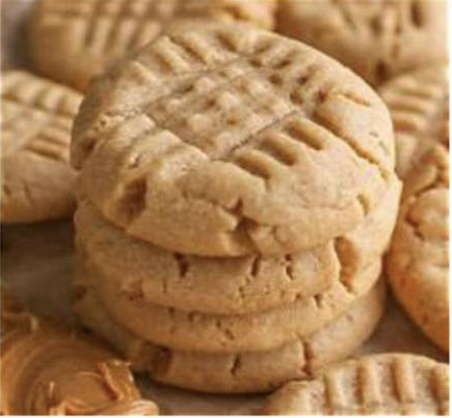
Peanut Butter Cookies
(Myrtle must have made this recipe so often that she only needed a list of ingredients. For the convenience of the modern cook, directions have been added.)
- 2 ½ cups sifted flour
- ½ tsp. baking powder
- ½ tsp. baking soda
- 1 cup shortening
- 1 cup peanut butter
- 1 cup granulated sugar
- 1 cup brown sugar
- 2 eggs
- ½ tsp. Salt
- 1 tsp. vanilla
Mix thoroughly together the shortening, peanut butter, sugars, eggs and vanilla. Sift together and stir in the flour, baking powder, baking soda and salt. Chill dough.
Roll dough into balls the size of large walnuts. Place 3 inches apart on lightly greased baking sheets. Flatten with a fork dipped in flour to make a crisscross. Bake at 375 degrees for twelve minutes or until set, but not hard. Yield: about 3 dozen 2 ½ inch cookies.
The Oxford Historical Society wishes to thank Charles Rowland for the reminiscences he shared about growing up and living in Oxford and Elizabeth Rowland for her help in selecting her grandmother’s recipes included in this article. The directions for the Peanut Butter Cook- ies were adapted from Betty Crocker’s Picture Cook Book. USA: Macmillan and Minneapolis: General Mills, Inc., c1950 and 1998.
Giving Tuesday – December 1st
The Oxford Historical Society works to bring awareness to Oxford’s rural heritage. We’re so grateful for the role Oxford residents and friends have played in pushing our mission forward.
Our team hosts events and preserves local memorabilia and artifacts of our town’s agricultural heritage. We have held Peach Fests, Fiber Fests, and many local history programs. We opened Oxford’s first and only museum in 2010. Then we moved an historic one-room schoolhouse. As we continue our mission, we’re planning a barn to preserve and display historical farm tools. There’s a way you can help support us! Giving Tuesday is a global day of giving on December 1st (the first Tuesday after Thanksgiving) – and Oxford Historical Society is participating.
Donations can be mailed to Oxford Historical Society, P.O. Box 582, Oxford, CT 06478 or may be made online through paypal or venmo at https://www.oxford- historical-society.org. Your support is essential and very much appreciated.
WHO’S THAT? A HISTORY OF OXFORD ROAD NAMES: PINE’S BRIDGE
Pines Bridge Road, which coincides with the present Route 42 from Chestnut Tree Hill Road to Gunntown Road in Naugatuck, is named for the span across the Naugatuck River at the foot of the hill. The name turns up repeatedly in Oxford town financial records, apparently a real headache to the selectmen because spring floods washed it away year after year.
Receipts for lumber, nails and men who did the repairs document how important the bridge was for local transportation. These town officials did not part with a single penny without very good reasons!
Here is the Selectmen’s record of money paid to James Sherman on September 18,1837: August 5. 1837 To repairs on Pines Bridge (Small Branch) as follows –
Myself 3 days at 11.25 13.75
8 Myself. W. Sackett & Amos Wooding each one day at
11.25 3.75
9 Myself. W. Sackett & Oscar Sherman each 1/2 day at
25 1.87
10 Myself & Oscar Sherman 1 Day each 2.50
To 452 feet timber at 1. (1 cent?) 4.52
To 120 feet Plank at 1.25 1.50
To 3 lbs Spikes .25
To 2 lbs Nails .18
To Iron for bolts .15
To Blacksmith work .50
118.97
The math does not make sense in a couple places. Possibly something in the selectmen’s reckoning does not translate to 21 st century arithmetic.
The first known record of the bridge’s name is in the minutes of a town meeting in 1843 when the selectmen accept a report from the committee on the Clark Pine’s Bridge fund, indicating that the bridge had been given that title after someone named “Pine”. There almost certainly had been a bridge there since the 1790s or early 1800’s. In 1824, a Pine’s Bridge Turnpike Com- pany was incorporated, running from Waterbury along what is now Chestnut Tree Hill, then to Pine’s Bridge Road, and finally joining the Oxford Turnpike and the Naugatuck-New Haven Turnpike. It was not long-lived, going out of business in 1836. Today, while Pine’s Bridge Road remains in Oxford, the bridge itself spans the Naugatuck River, with one footing in Oxford and the other in Beacon Falls..
Information for this article came from Norman Litchfield and Sabina Connolly Hoyt’s History of the Town of Oxford, Connecticut, c1960 and Oxford town financial records.
MEMBERSHIP RENEWALS
OHS membership is due for renewal for 2027 and the rates have not changed! Forms can be downloaded at the OHS website.(https://www.oxford-historical-society.org)
Mail forms and checks to OHS, PO Box 582, Oxford, CT 06478. Individual memberships are 115, Seniors and Junior Associates (under 18) 110, Families 125 and Business Supporters (1200).
Member dollars help with society expenses and activities, and the numbers of members are used by grant givers as an indication of involvement with the community. Also listed are opportunities for volunteering. Be sure to check those that appeal to you. Being a member really counts for us!
We appreciate gifts of any amount. Community support preserves our history and prepares us for the future.
- Online gift through our website https://www.oxford-historical-society.org, with paypal or venmo, or
- Checks mailed to the Oxford Historical Society P.O. Box 582, Oxford, CT 06478
Discovering and Documenting Oxford’s Revolutionary History

Help Us Make More History as the Oxford Historical Society’s America/250 Project documents the lives and records of Oxford’s veterans of the American Revolution for preservation. The dozen local volunteers of all ages have researched period records in print and online. With the better weather this spring efforts will shift to locating veterans’ headstones in local cemeteries.
Using the newly verified and expanded information people will be needed to expand records: photographers, readers and writers, video/sound recorders and tomb- stone cleaners and more.
America/250 may offer volunteers options for fulfilling community service, Eagle or Gold Scout, or Capstone project requirements. History buffs are especially welcome. Membership in the Oxford Historical Society is not required. Interested persons may call Dorothy DeBisschop at 203 910-4574.