Oxford Historical Society, a 501 (c) 3 charitable organization
Twitchell Rowland Homestead Museum
P.O. Box 582, 60 Towner Lane, Oxford, CT 06478
Open House: May 17, June 7 and 21.
Each month on the first and third Sunday from 2 to 4 pm the Twitchell-Rowland Homestead is open to the public. Docents chat about the history of the house and the items found inside as well as other topics of interest to the community. Admission is free, all ages welcome
On Display: Fibers in Captivity
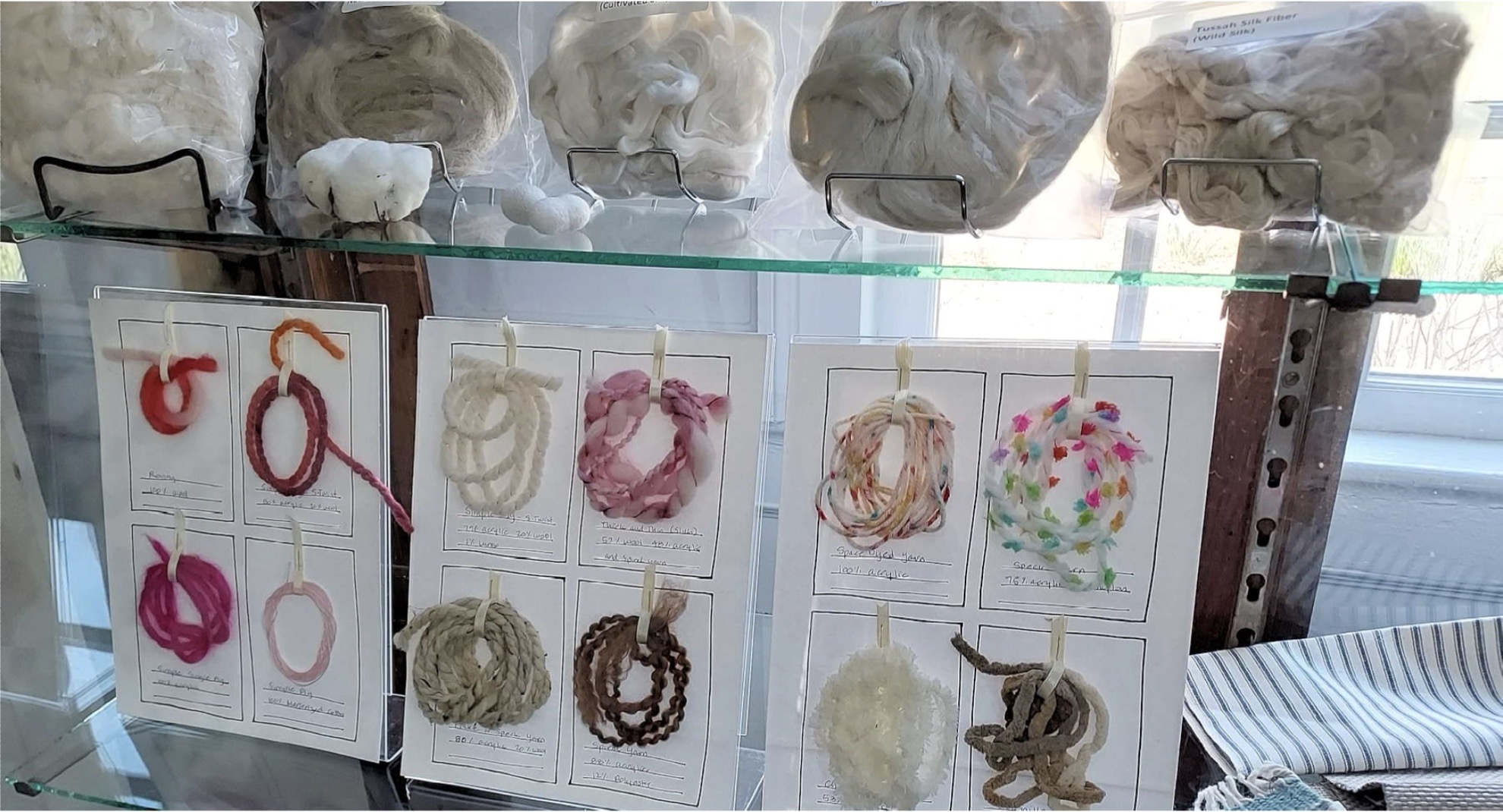
On Display: Fibers in Captivity– A wide range of fiber products with expanded information on growing and using the various resources fill two display cases at the Homestead. The display includes how flax stems get made into linen thread, Cotton in a plant, silkworm cases and more are among samples from the collection of society member Linda Scinto, who collected them for her college level fiber arts classes where she explored these examples as she used them as teaching materials. Books produced by the Society are available for purchase as well as unique notecard sets created using local art and photographs. Proceeds benefit the society’s events and activities plus maintenance of the buildings and grounds.
DO YOU HAVE A CD PLAYER in your closet that you would like to unload? The Oxford Historical Society is looking for a small working CD player to provide background music for Homestead events. If you have one you’d like to donate, please contact Nancy Farnum at 203 888-0230. Thank you.
WHO’S THAT? A HISTORY OF OXFORD ROAD NAMES: MOOSE HILL ROAD
In the 1990s, a biology teacher at St. Margaret-McTernan School in Oxford explained to his students that Oxford’s Moose Hill Road got its name from a small group of moose who were stranded there as the most recent glacier receded. The moose provided food, hides, bones and antlers to the local Native Americans who hunted them judiciously, always leaving enough of the huge animals to breed and sustain the herd. When white settlers came at the beginning of the 18th century, he said, they promptly killed all the animals and only the name remained.
That’s one explanation for the name of the road, but there are several other possibilities. The earliest reference to “Moose Hill” found is in a deed with the local Native American tribe dated 1701-1702 that historian Norman Litchfield labeled “Tract C” in his History of the Town of Oxford, Connecticut. This included a portion of the western and central part of town encompassing Moose Hill, Little River and the Naugatuck River.
Moose Hill Road appears on the 1868 Beers’ map of Oxford, but according to Town Historian Dorothy DeBisschop and author and editor William C. Sharpe, it was changed to Hell Lane or Ell Lane and was called that into the 20th century. Sharpe attributes the new name to the abundance of home brewed alcohol in the neighborhood. Nearby Still Road did not get its name because it is a nice, quiet place!
There are other explanations for the name “Moose Hill.” There are several Native American words beginning with the “moose” sound. One of the most likely from New Haven County cited in Indian Place Names of New England by John C. Huden is Moosamuttuck River from the Quinnipiac tribe meaning “big springs in the river,” or “big rocks in the stream,” or possibly, “Big Shoulders” which might have been the name of a chief.
Finally, Michael Bawlick who has lived on Moose Hill all his life, offers this suggestion: Moose Hill got its name from the contours of the nearby hills that reminded the Native Americans and the settlers who followed them of the large hump on a moose’s back.
Dorothy DeBisschop notes that “The folklore behind names can be interesting but never definitive. This makes it both frustrating and charming – everybody can have their own opinion without the need for documentation.” Choose which theory for the origin of the name “Moose Hill” that you think most likely!
Oxford Nature and Arts Festival
The Oxford Nature and Arts Festival is coming on Sunday June 7, 10 am to 4 pm. Sponsored by the Oxford Land Trust this is a celebration of Oxford’s Main Street Project. Fine Arts and quality crafts will be on display and available for purchase; musicians will offer accompaniment and food trucks will provide treats. A morning walk will start the day and with a reptile demonstration as well. Local non-profit groups will share information on their activities and role in the local community.
Parking is available across Route 67 at the Town Hall complex. This is a free event, no admission is charged.
Commemorating America/250

Help us make more history as the Oxford Historical Society’s America/250 Project documents the lives and records of Oxford’s veterans of the American Revolution for preservation. The dozen local volunteers of all ages have researched period records in print and online. With the better weather this spring efforts will shift to locating veterans’ headstones in local cemeteries.
Using the newly verified and expanded information people will be needed to expand records: photographers, readers and writers, video/sound recorders and tombstone cleaners and more.
America/250 may offer volunteers options for fulfilling community service, Eagle or Gold Scout, or Capstone project requirements. History buffs are especially welcome. Membership in the Oxford Historical Society is not required. Interested persons may call Dorothy DeBisschop at 203 910-4574.
2026 Fiber Fest

The 8th Annual Fiber Fest held on April 18 and 19 offered a peek into Oxford’s agricultural past at the 8th annual Oxford Historical Society Fiber Fest. This unique free program was on the grounds of the Twitchell-Rowland Homestead at 60 Towner Lane off Route 67 across from St. Thomas Roman Catholic Church. Local crafters offered knitting, crocheting, weaving, rug hooking and more. On Sunday the New England Lace Makers Guild showed hand made lace produced when threads wrapped around colorful bobbins twisted and knotted into centuries old, astonishingly delicate designs in this timeless craft.
Hand crafted fiber arts were on hand from vendors: Rose East – knitting and felting; Leila Orienter – hand knits; Gail Cameron – embroidery; Robin Zeigler – brooms; Mardi Smith – baskets; Kitti Deak – herbs; Stephanie Miller – soaps; June Bissonette – alpaca farm; Katherine O’Keefe – Pink Petticoats children’s clothing; Carol McElroy – weaver; Patty Clark – clothing. New this year rug hooker, Naomi Allen owner of Raven’s Gate Rug Hooking demonstrated the antique craft. Fiona Fine spun fiber into yarn on an antique spinning wheel. On Sunday a small group of spinners made wheels of all sizes go round and round in the homestead.
Demonstrations of weaving on the historic Jensen Barn Loom which fills one room of the museum were given by Jan Galloway, Val Nelson, Linda Scinto, Richard Crane and Heidi Farnum.
Weather permitted shearing goats on Saturday. The museum and the newly restored Munn schoolhouse were open for free tours. Docents chatted about the house built in 1755 by the Twitchells and the one room schoolhouse used in 1850 by Marcus Munn as a class- room for his boarding school on Oxford Road. Both build- ings were relocated to the Historical Society campus to prevent their demolition.
Homemade treats were offered. Books and notecards produced by the Oxford Historical Society members were on sale, featuring the old houses and buildings in Oxford, the history of local railroads, and veterans of various wars and conflicts. The society’s photo-based notecards are scenes of the Stevenson Dam construction a century ago as well as historic views from the Society’s collections, and the newest designs are Claudia Farkas’s architectural prints of five of Oxford’s historic homes.
All sales and donations from this event benefited the Oxford Historical Society and focused on support- ing programs and preservation activities
Scrappy Quilt a Gift From Society Friend Marianne Moerkens.
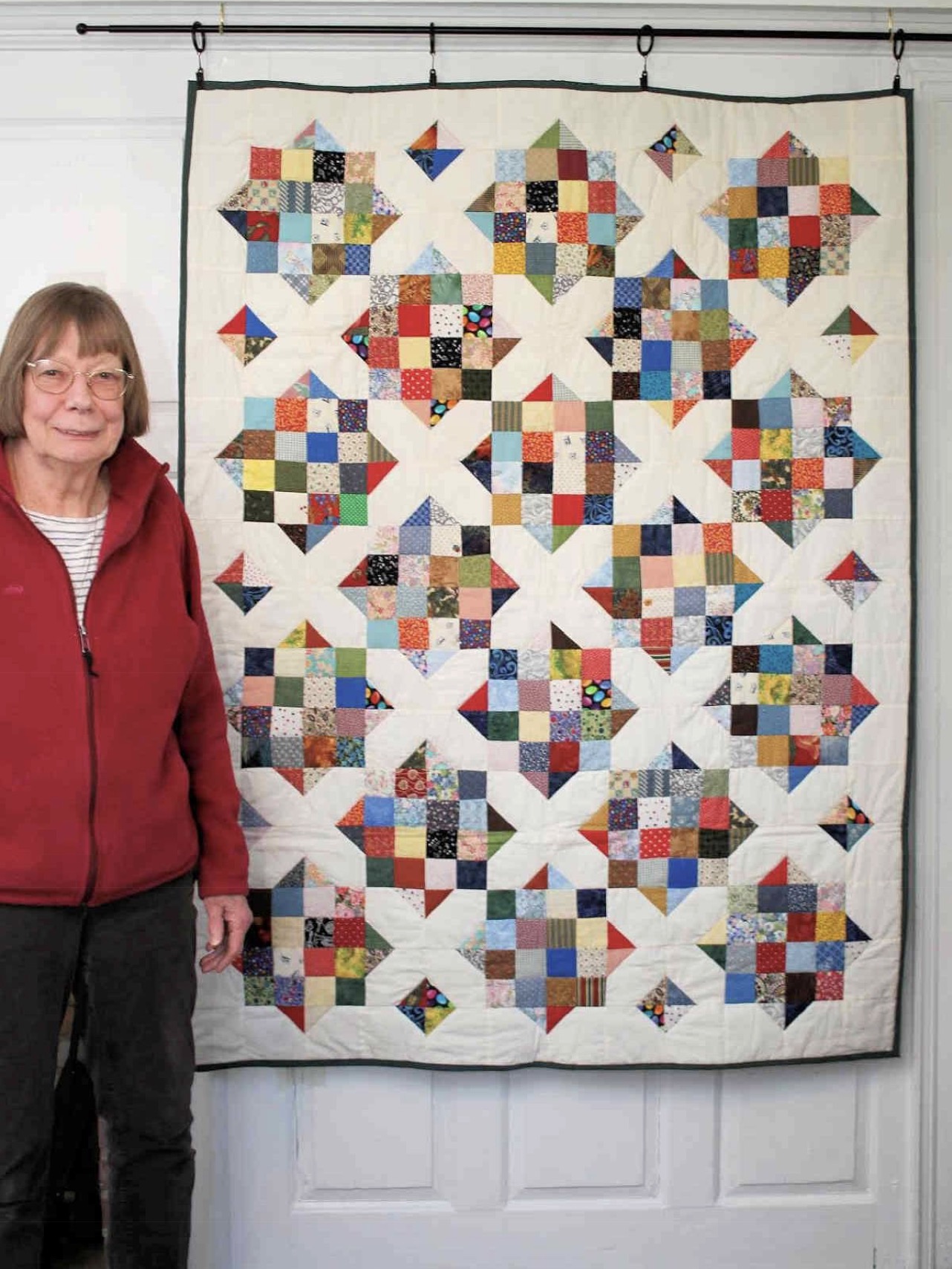
Here she stands beside her “Scrappy Quilt,” newly donated to the Oxford Historical Society for display at the Homestead Museum. Stitched from glowing new and vintage fabrics, its vibrant geometric shapes are set against a white background. The quilt will be on view through the spring and summer months.
Special Reminder for New and Existing Members
OHS membership is due for renewal for 2026 and the rates have not changed! Forms can be downloaded at the OHS website. Mail forms and checks to OHS, PO Box 582, Oxford, CT 06478. Individual memberships are 115, Seniors and Junior Associates (under 18) 110, Families 125 and Business Supporters (1200).
Member dollars help with society expenses and ac- tivities, and the numbers of members are used by grant givers as an indication of involvement with the community. Also listed are opportunities for volunteering. Be sure to check those that appeal to you. Being a member really counts for us!
You can download a membership form from the internet at www.oxford-historical-society.org/membership.pdf
Spring Fund Raising Results:
- Ion Bank Foundation’s Community Awards Program 2026 produced 1350 for the Oxford Historical Society from their online voting in March 2026. Thank you to each voter for your 125 vote.
- CCF’s Give Local 2026 – ran April 21 and 22. The society earned 1650 from 10 pledgers during the 36 hour online giveathon.
- A special thankyou to Nancy S. Daoud and Opus: Advice First for a very generous 11000 gift in honor of our shared history. Her note read: It is with pleasure that we support the history of our community – from our 1714 Red House. It is a pleasure for us to be so appreciated!
We appreciate gifts of any amount. Community support preserves our history and prepares us for the future.
Gifts may be made through:
- Online gift through our website https://www.oxford-historical-society.org
- Checks mailed to the Oxford Historical Society P.O. Box 582, Oxford, CT 06478
Little River Program
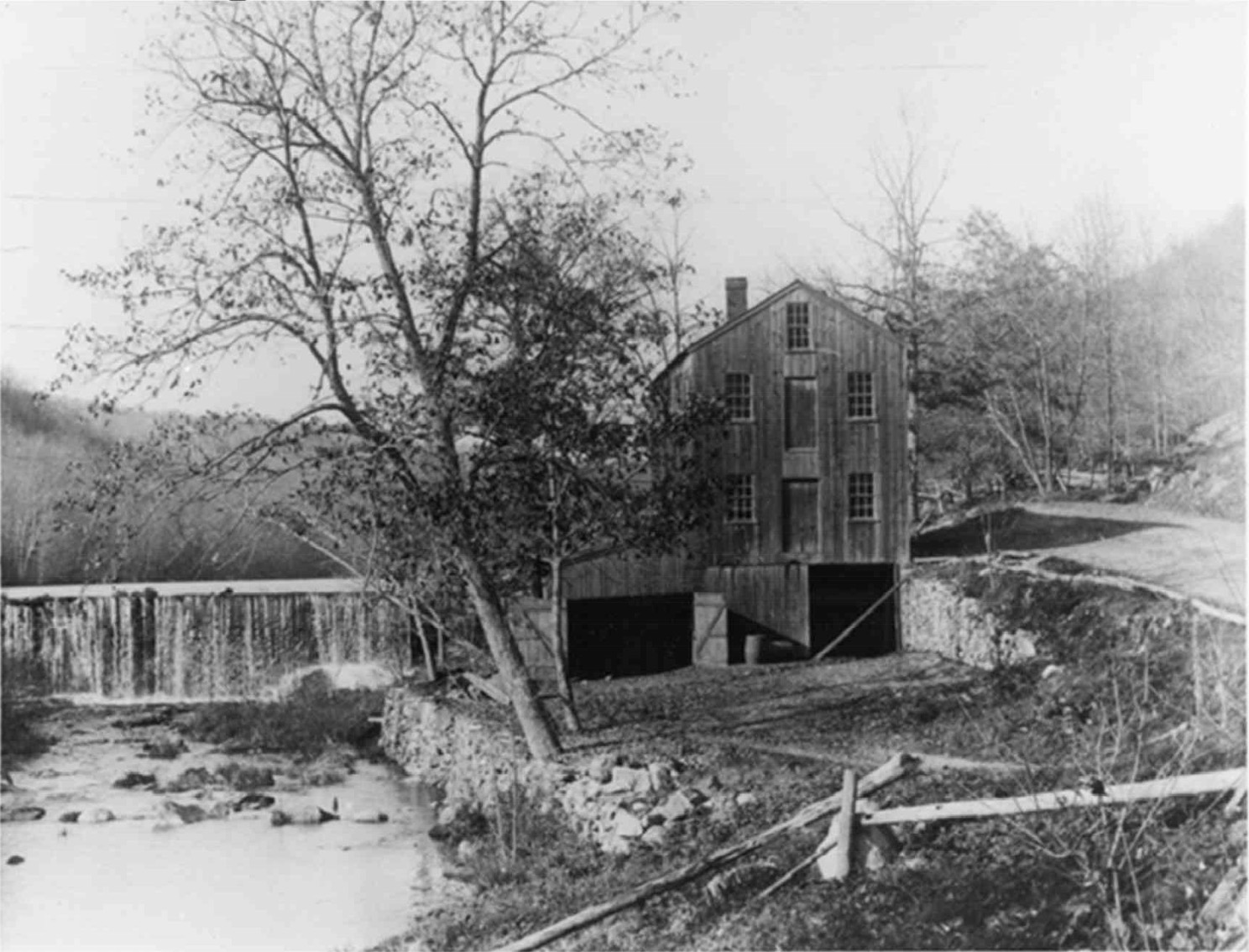
A History of Industry on Oxford’s Little River: from Hoadley’s Pond to Southford Falls was presented by Dorothy DeBisschop, Town Historian, on Tuesday, April 28, at the Oxford Library. The look at the early years of Oxford’s industrial development focused on the many mills in town. New photos were provided by Seymour’s Peter Rzasa. There were Lidar shots as well. Attendance was limited by registration, and the room was full and had a wait list.
Heritage Recipes: BAWLICK FAMILY
Michael Bawlick’s family roots go back to a small town in Austria where both the name and the borders changed after wars and political divisions. His grandmother, Mary, emigrated to Jersey City when she was 16 to work for a Jewish family. The plan was that she would save her sal- ary and return home, but instead she married Mike’s grandfather, Wasil, about 1900 and moved along with others from the same area in Austria to Oxford to what was then called Park Road but is now Moose Hill. Mike calls the Belinsky, Dytko and Yirish families “shirt tail cous- ins.”
There was no house on the site at first, just a well and a barn where the Woosters kept their oxen. Later they moved back to Jersey City for a bit, renting the house they’d built, but returned when the renters stopped pay- ing.
Their oldest daughter was Mike’s mother, Elizabeth (“Betty”), followed by Peter, 2 other girls, Julia, Martha, “Pinky” (Polly), Michael and Ted. Wasil farmed the land but also worked wherever he could. When Stevenson Dam was being built, he walked to the Housatonic, and if he got lucky, he caught a ride home. He also worked at a hat factory, riding the train to Danbury on Monday and coming home for weekends. He died in his late forties, possibly of tuberculosis contracted from the fibers floating in the air from the hatting process. His youngest, Ted, was 10.
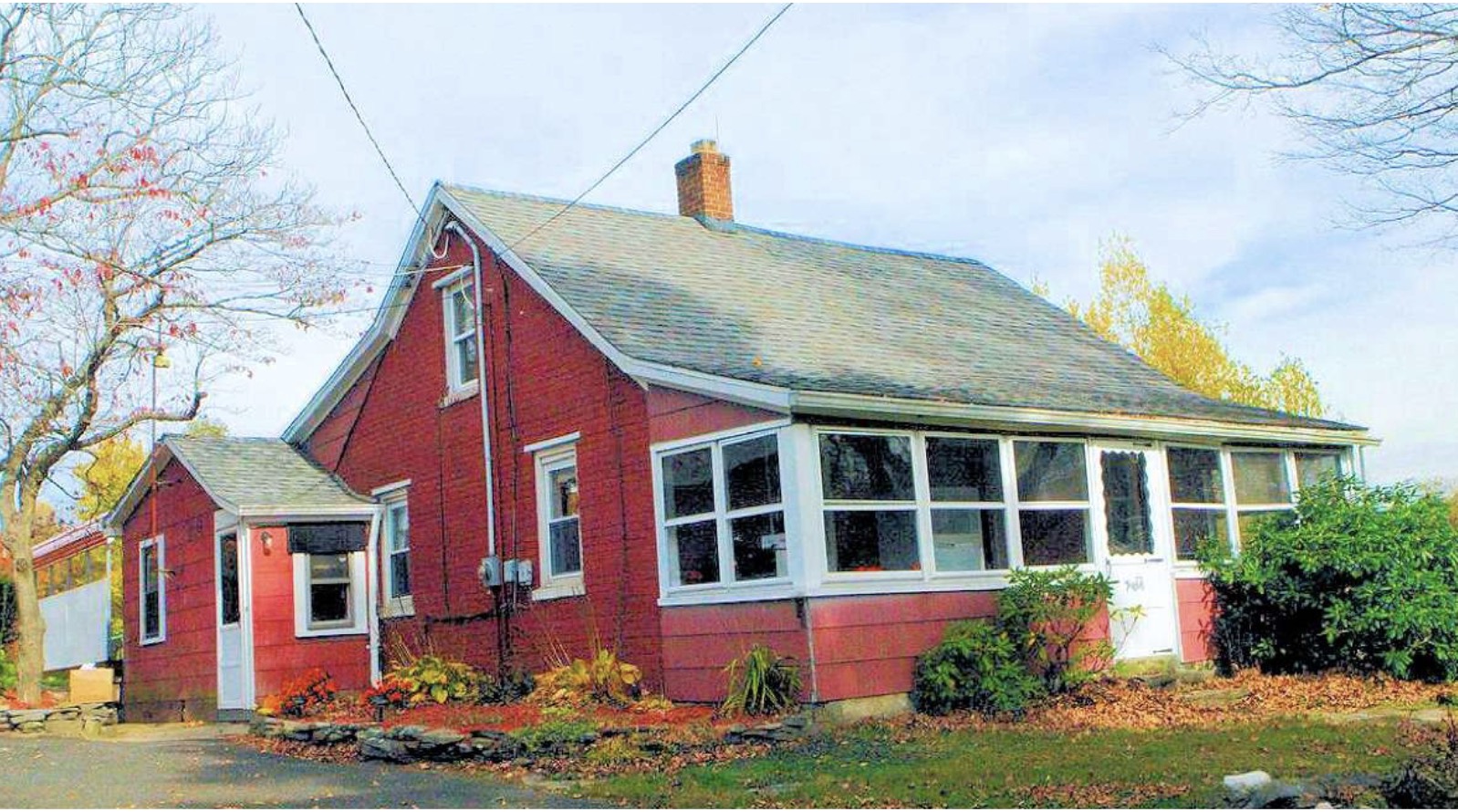
After the loss of his dad, Mike’s Uncle Peter took over the farm at 16, quitting school. He added on to the barn, installing stanchions, building a milk house where water cooled the cans, and erecting a horse barn that was later converted to a chicken coop. Like so many Oxford farmers he sold his dairy products on a route in Seymour. Eventually, Grandmother Korin divided the property among her family, and Peter moved to a house he built on land on Route 188, selling the cows and go- ing to work at the Sponge Rubber Plant. He passed awaat 69 from a heart attack. Another son, Michael, re- ceived six acres on Punkup Road.
Betty separated from her husband c1945 and she and her three children, Dan (1930), Greg (1938), and Mike (1942), moved to the house on what is now Moose Hill Road. Her mother gave her life use of six acres, a barn and a well. There was no bathroom in the house and no running water. They did have elec- tricity. The property now has 3 wells dug at various times. At first there was only ¾ of a gallon of water per minute from the 400 foot well Betty had dug. Mike, whose job it was to water the cows before he went to school, remembers when another well was enlarged and he used the plumbing skills he’d learned at school so there was plenty of water for the cows. Betty noted that they produced more milk because the cattle were getting enough water to drink at last. Over time, Mike saw another well drilled, and installed a septic sys- tem, a dry well and running water, complete with an indoor bathroom for the family at last. Pipes for these improvements were scavenged from wherever he could find them. “You can make life better by using God-given talents to make something out of noth- ing,” he observes.
His mother, Betty set the example for this ethic. The Depression gave her an education you couldn’t buy, again emphasizing the “something from nothing” motto. She survived the Depression and raised her family during those lean years. She usually bought grain from the Wirthmore Company in Southford rather than another firm in Seymour because the Wirthmore grain came in sacks that she could bleach and turn into pillowcases and sheets.
Because they were farmers, she and the children didn’t go hungry. Anything that was surplus such as fruits and vegetables was immediately canned and put on shelves in the cellar. Carrots, potatoes and tur- nips were preserved there in sand. If a chicken slacked off on egg production, it was headed for the table for Sunday dinner. Everything they couldn’t eat was fed to the chickens.
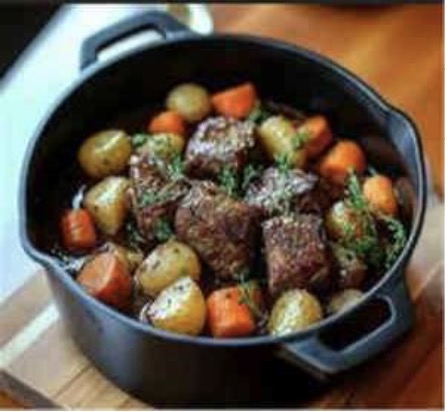
Betty’s signature dish was her pot roast. Mike still makes it today, using her pot. The roast is surrounded by potatoes, carrots, and turnips. It’s partially cooked and then glazed with flour and pan juices. Season- ings permeate the meat through holes slit in the outer layer. The recipe follows this article.
For a while Betty had a thriving catering business, creating hors d’oeuvres for parties for Yale doctors and professors in Woodbridge. She got a permit from the health department for her kitchen and created appetizers from small squares or triangles of bread with a slice of boiled egg in the middle. Cream cheese would be piped around the outside and a dab of may onnaise held a tiny piece of olive and a sprig of parsley in the center. Mike’s job was to put more bits of olive on each corner of the bread. Sometimes a rolled anchovy would replace the olive in the middle. Other variations were a heap of caviar with the cream cheese decora- tively placed around the edge.
Betty is remembered for her roadside stand where she sold vegetables, especially corn, and eggs from her chickens, encouraging folks to stop by for a chat. She always kept a milking cow so there were butter and cheese. Mike recalls leading the cow along the road to get the best grass to eat. Offspring were sold. One of Betty’s best customers was Cyrus Shelton, Oxford’s tax collector for over 50 years. Cy was a talker, and he shared with Betty in 1955 that he was breaking up his farm and selling 14 acres at the top of Park and Still Roads. Betty said she’d like to buy it and Mike cut the brush so the land could be surveyed. Cy demurred. He’d have “to go home and talk with “Mother.” Mike jokes “Mother” must have been 110 years old; she was truly ancient. Eventually Shelton accepted Betty’s offer of 12,500. She gave him his down payment and paid off the rest in 6 months with money she made at her cater- ing jobs. At some point she found out that the 14-acre lot was actually 29 acres. At 187 an acre, she’d gotten quite a bargain.
Sunday was a day of rest except for necessary chores. The family attended the Russian Orthodox Church in Ansonia. Sometimes Betty didn’t care for the politics, but she continued to go. Finally, when gas went from 19 cents a gallon in 1949 to 21 cents, she pro- tested. “I can’t afford the gas to drive you kids all the way to Ansonia to church,” she said. From then on, they went to Christ Church in Quaker Farms, where Mike continued for many years.
Since Betty was separated from her husband, Dan was the father figure in the family. He developed tuber- culosis, had to drop out of college, and spent a lengthy period in a sanatorium where constant x-rays monitored the patients’ progress. When Streptomycin was devel- oped, he was pronounced cured and came home to farm the 14 acres his mother gave him. He married and had two daughters. Later he and his family moved to Binghamton, NY to try his hand at mink ranching. A few months later, he developed melanoma from all the x- rays from his TB treatments and died at only 36. Mike was devastated with his brother’s loss.
Greg rented a farm in Woodbury and then moved to upstate New York to increase the size of his acreage. It didn’t go well, and he ended up selling out and build- ing a home in Fort Anne, NY with the proceeds of the sale. When he passed, he asked Mike to perform his funeral service.
Mike was the last child at home. When he bought a boat, Sylvia, the niece of the seller, came downstair and said she was sorry to see it go. Mike offered her a ride, and that ride turned into a 42-year marriage, end- ing only when Sylvia passed away. Mike worked as a metallurgist at Bridgeport Brass, and upon retiring, did consulting work. He and Sylvia had 2 children, Cheryl and Danny, and Mike has five grandchildren and two great-grandchildren. He enjoyed attending church with them where they lived and brought home the best parts of the service to suggest they be incorporated at Christ Church. Cheryl passed away, but Danny lives on his Uncle Ted’s property, once the North Star Mink Ranch, at 212 Moose Hill Road. He and Mike have devoted the last several years to restoring the property and clean- ing out the pond, a labor of love for them both. Here is Betty Bawlick’s pot roast recipe that Mike has kindly shared. We have edited it using information from The New England Yankee Cookbook by Imogene Wolcott to make it a bit easier to follow.
BAWLICK FAMILY POT ROAST
- 4 pounds beef – round, chuck or rump
- Salt, pepper, flour; Mike especially recommends lemon pepper
- 1 bay leaf and a sprig of parsley if desired
- 2 tbsp. Shortening
- 6 carrots
- 6 onions
- 6 potatoes
- 1 small turnip, sliced (optional)
Wipe meat with paper towels. Poke holes in the roast and sprinkle with salt, pepper and flour. Mike says, “Go easy on the salt.” Brown meat on all sides in the hot shortening in a covered roasting pan or Dutch oven. When brown, place potatoes, carrots, onions and turnip if desired around the meat. Add about an inch of boiling water. Add bay leaf and parsley. Cover and simmer slowly for 3 hours, keeping the water at about 1 inch while cooking. Sprinkle with flour and baste with the pan juices. Season the vegetables when basting.
About 1 hour before the meat is finished, remove the cover and let the meat brown until dark. Never let it dry out too much, just a bit on top. Enjoy.
If gravy is desired, mix about 2 tablespoons flour in ¼ cup cold water to a paste. Add a few spoonfuls of the hot meat juices to the mixture and blend. Stir into the liquid in the bottom of the pan. Adjust gravy seasonings as necessary. Serves 8.
The recipe also included information from Imogene Wolcott’s The New England Yankee Cook Book. New York: Coward-McCann (c1939).
The Oxford Historical Society wishes to thank Mike Bawlick for his memories of growing up on Moose Hill Road and for sharing his pot roast recipe with our readers.